
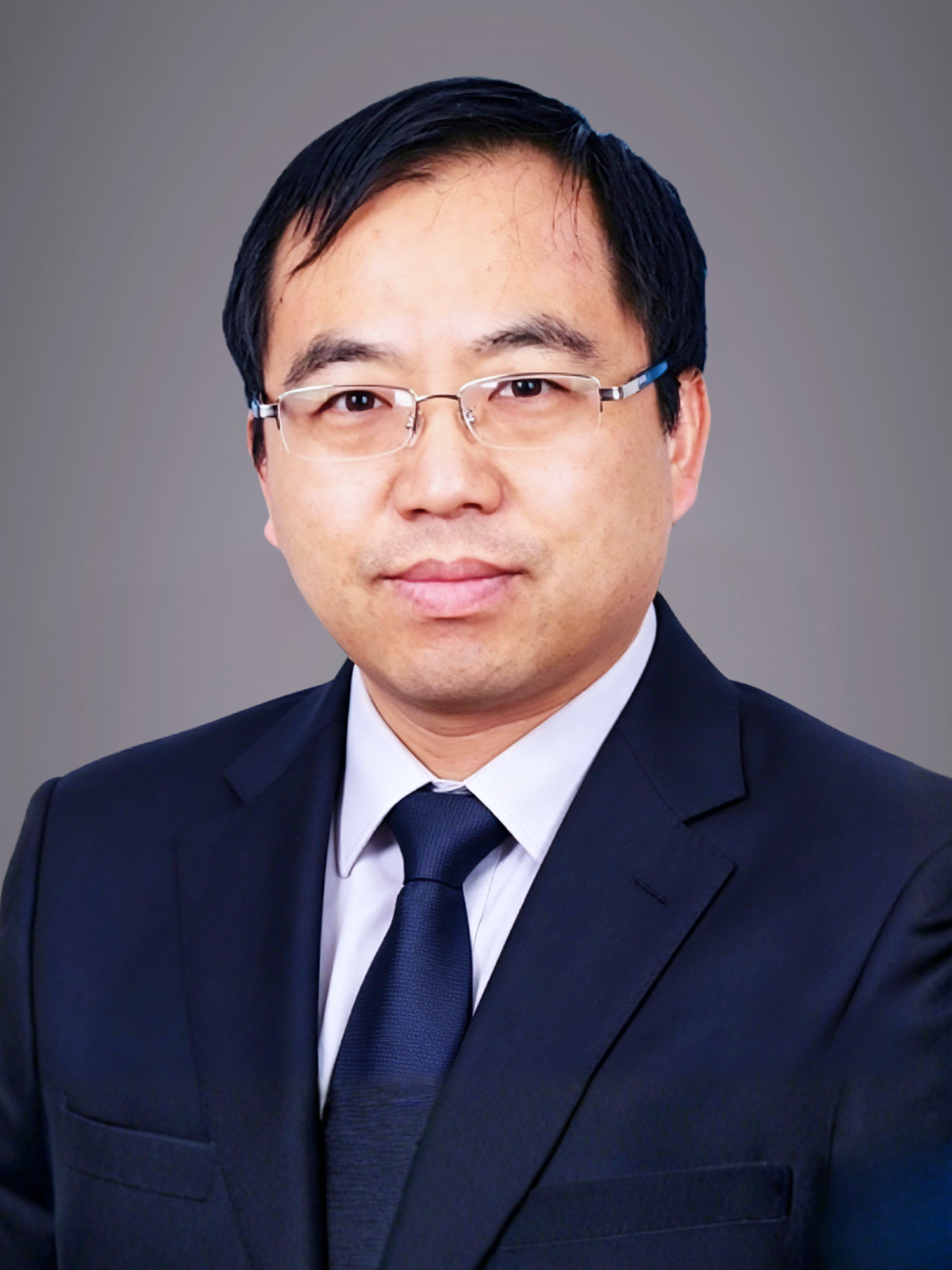
Guoqiang BICenter Director
- 职称:
Professor
- 联系方式:
gqbiustc@gmail.com
- 个人网页:
- 座右铭:
个人简介
Professor Guoqiang Bi is an internationally renowned biophysicist and neurobiologist. In his early research, he discovered spike-timing-dependent plasticity (STDP) in hippocampal neurons and conducted a series of studies on its cellular mechanisms and computational rules, exerting a profound influence on neurophysiology, artificial intelligence, and related fields. In recent work, he has developed and applied novel microscopic imaging techniques to decipher the multiscale complex structure and function of the nervous system. Among these, cryo-electron tomography has enabled the in-situ analysis of the ultrastructure and molecular architecture of neuronal synapses, while the synchronized flying-scanning microscopy technique has achieved micron-resolution imaging and mesoscopic mapping of the entire primate brain.
研究领域
代表论著
1.Xue F#, Li F#, Zhang KM#, Ding LF, Wang Y, Zhao XT, Xu F, Zhang DK, Sun MZ, Lau PM, Zhu QY, Zhou PC*&Bi GQ*. Multi-region calcium imaging in freely behaving mice with ultra-compact head-mounted fluorescence microscopes. National Science Review (2023)
2.Liu YT#, Zhang H#, Wang H, Tao CL,Bi GQ*& Zhou ZH*.Isotropic reconstruction for electron tomography with deep learning. Nature Communication 13(1):6482 (2022)
3.Xu F#, Shen Y#, Ding LF#, Yang CY#, Tan H, Wang H, Zhu QY, Xu R, Wu FY, Xu C, Li QW, Su P, Zhang LI, Dong HW, Desimone R, Xu FQ, Hu XT, Lau PM* &Bi GQ*. High-throughput whole-brain mapping of rhesus monkey at micron resolution. Nature Biotechnology. (2021)
4.Liu Y-T#, Tao CL#, Zhang XK#, Xia WJ, Shi DQ, Qi L, Xu C, Sun R, Li XW, Lau PM*, Zhou Z H* &Bi GQ*. Mesophasic organization of GABAA receptors in hippocampal inhibitory synapse. Nature Neuroscience (2020).
5.Wang H#, Zhu QY#, Ding LF, Shen Y, Yang CY, Xu F, Shu C, Guo YJ, Xiong ZW, Shan QH, Jia F, Su P, Yang QR, Li B, Cheng YX, He XB, Wu F, Zhou JN, Xu FQ, Han H, Liu PM* &Bi GQ*. Scalable volumetric imaging for ultrahigh-speed brain mapping at synaptic resolution. National Science Review 6:982-992 (2019).
科研\学术成果
Professor Guoqiang Bi has published more than 80 peer-reviewed papers, with over 16,000 total citations and a single paper cited more than 5,000 times.He is a recipient of the Outstanding Young Scientist Award of the National Natural Science Foundation of China, a Distinguished Professor under the Changjiang Scholars Program of the Ministry of Education, a Leader of Science and Technology Innovation in the National Ten-Thousand Talents Program, and a laureate of the Hundred Talents Program of the Chinese Academy of Sciences. He serves as Associate Editor of Frontiers in Neural Circuits and on the editorial boards of several other international academic journals.He has been included among the World’s Top 2% Scientists by Stanford University for many consecutive years and is a Highly Cited Chinese Researcher awarded by Elsevier. He is currently leading one project under the U.S. Brain Initiative and one key project of the National Natural Science Foundation of China, among other ongoing research programs.