
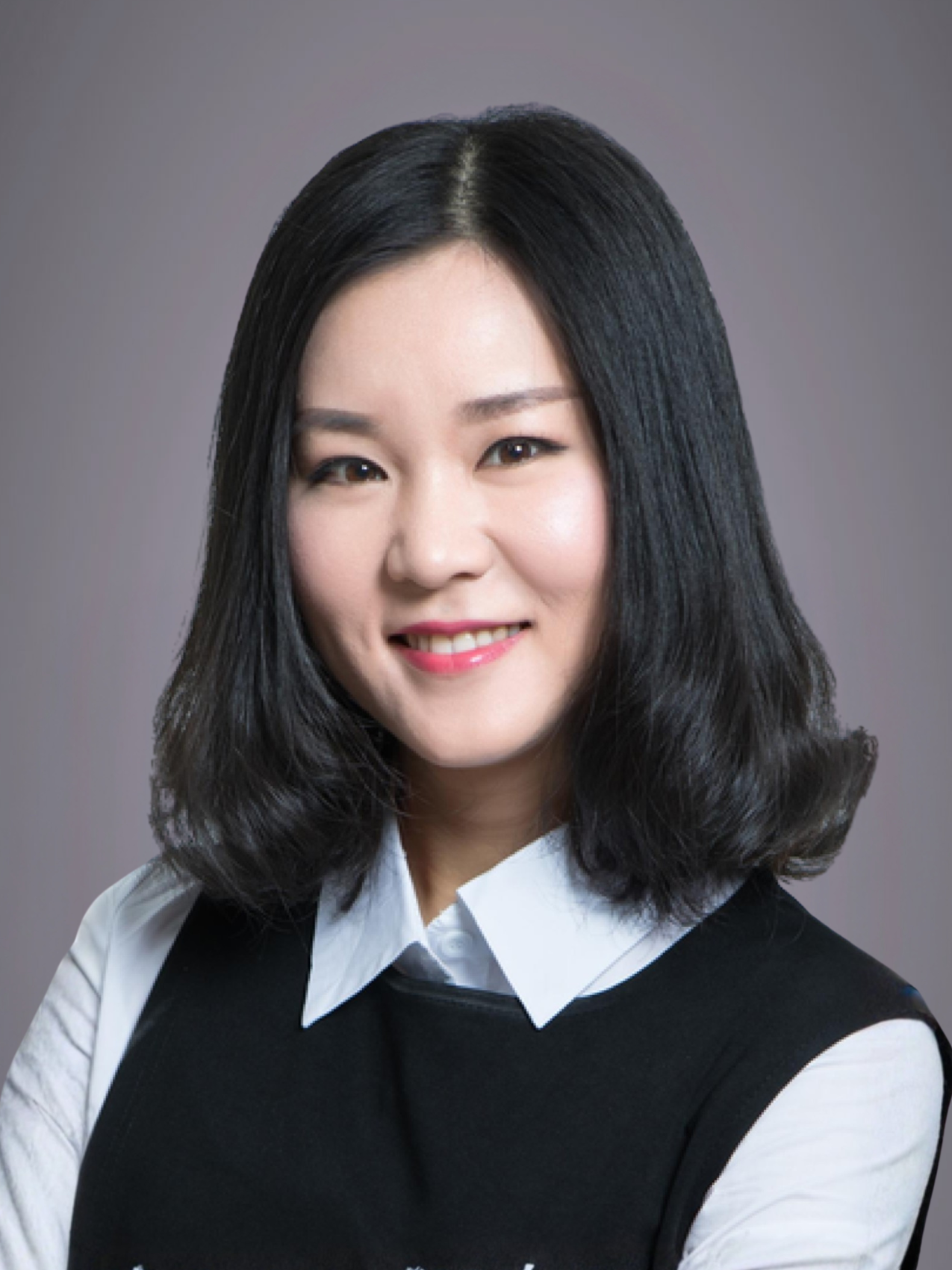
Yan HUANG
- 职称:
Associate Investigator
- 联系方式:
yan.huang@siat.ac.cn
- 个人网页:
- 座右铭:
个人简介
Yan Huang, Ph.D., a doctoral supervisor and a High-level Talent of Shenzhen at the Institute of Brain Science, Shenzhen Institutes of Advanced Technology, Chinese Academy of Sciences (SIAT, CAS), received her Bachelor of Science in Physics from Beijing Normal University in 2005 and her Ph.D. in Cognitive Neuroscience from the Institute of Biophysics, CAS in 2012 under the supervision of Academician Lin Chen; her main research focuses on the neural mechanisms and neuromodulation of human visual attention and emotion as well as their translational applications in brain disorders, dedicated to the early objective diagnosis and non-invasive intervention of anxiety disorders, depression, schizophrenia, attention deficit hyperactivity disorder (ADHD) and other brain diseases, and she currently serves as the director of both the Innovation Consortium for Healthy Light Research and Clinical Application and the Industrial Innovation Center for Precision Non-invasive Diagnosis and Treatment of Brain Disorders at SIAT, CAS.
研究领域
Research on the Neural Mechanisms and Non-invasive Modulation of Human Cognition and Emotion
代表论著
1.Hu, L., Xiong, M., Liang, J., Huang, Y. *(2025). Is individual attentional bias positive or negative? It depends on trait anxiety. Social Cognitive and Affective Neuroscience, 20(1): nsaf123. https://doi.org/10.1093/scan/nsaf123
2.Zhu, M.#, Liang, J.#, Wang, W., Deng, H.*, & Huang, Y.* (2024). Deficits of the "Good" Eye in Amblyopia: Processing Geometric Properties. Investigative ophthalmology & visual science, 65(8), 33. https://doi.org/10.1167/iovs.65.8.33.
3.Hu, L., Tang, H., & Huang, Y.* (2023). General deficits of attentional inhibition in high trait anxiety: ERP evidence. Cerebral cortex (New York, N.Y. : 1991), 33(11), 7288–7296. https://doi.org/10.1093/cercor/bhad038
4.Wang, W., Zhou, T., Chen, L.*, & Huang, Y.* (2023). A subcortical magnocellular pathway is responsible for the fast processing of topological properties of objects: A transcranial magnetic stimulation study. Human brain mapping, 44(4), 1617–1628. https://doi.org/10.1002/hbm.26162
5.Tang, H., Song, R., Hu, Y., Tian, Y., Lu, Z., Chen, L., & Huang, Y.* (2021). Late Development of Early Visual Perception: No Topology-Priority in Peripheral Vision Until Age 10. Child development, 92(5), 1906–1918. https://doi.org/10.1111/cdev.13629
6.Shen, L., Liu, D.*, & Huang, Y.* (2021). Hypothesis of subcortical visual pathway impairment in schizophrenia. Medical hypotheses, 156, 110686. https://doi.org/10.1016/j.mehy.2021.110686
7.Wang, M., Huang, Y., Luo, H., & Zhang, H. (2020). Sustained Visual Priming Effects Can Emerge from Attentional Oscillation and Temporal Expectation. The Journal of neuroscience : the official journal of the Society for Neuroscience, 40(18), 3657–3674. https://doi.org/10.1523/JNEUROSCI.2539-19.2020
8.Huang, Y.#*, Li, L.#, Dong, K., Tang, H., Yang, Q., Jia, X., Liao, Y., Wang, W., Ren, Z., Chen, L., & Wang, L.* (2020). Topological Shape Changes Weaken the Innate Defensive Response to Visual Threat in Mice. Neuroscience bulletin, 36(4), 427–431. https://doi.org/10.1007/s12264-019-00454-w
9.Huang, Y.*, He, L., Wang, W., Meng, Q., Zhou, T., & Chen, L.* (2018). What determines the object-level visual masking: The bottom-up role of topological change. Journal of vision, 18(1), 3. https://doi.org/10.1167/18.1.3
10.Huang, Y., Chen, L., & Luo, H. (2015). Behavioral oscillation in priming: competing perceptual predictions conveyed in alternating theta-band rhythms. The Journal of neuroscience : the official journal of the Society for Neuroscience, 35(6), 2830–2837. https://doi.org/10.1523/JNEUROSCI.4294-14.2015
科研\学术成果
She has published 17 SCI-indexed papers in prestigious international journals including The Journal of Neuroscience, Human Brain Mapping, Cerebral Cortex, Child Development, Neuroscience Bulletin and IOVS, among which 15 papers were authored as (co-)first author or corresponding author. She also holds 23 authorized national patents, and has presided over a number of scientific research projects such as the General Program of the National Natural Science Foundation of China, the General Program of the Natural Science Foundation of Guangdong Province, the National Brain Project, as well as discipline layout and basic research projects of Shenzhen Municipality.