
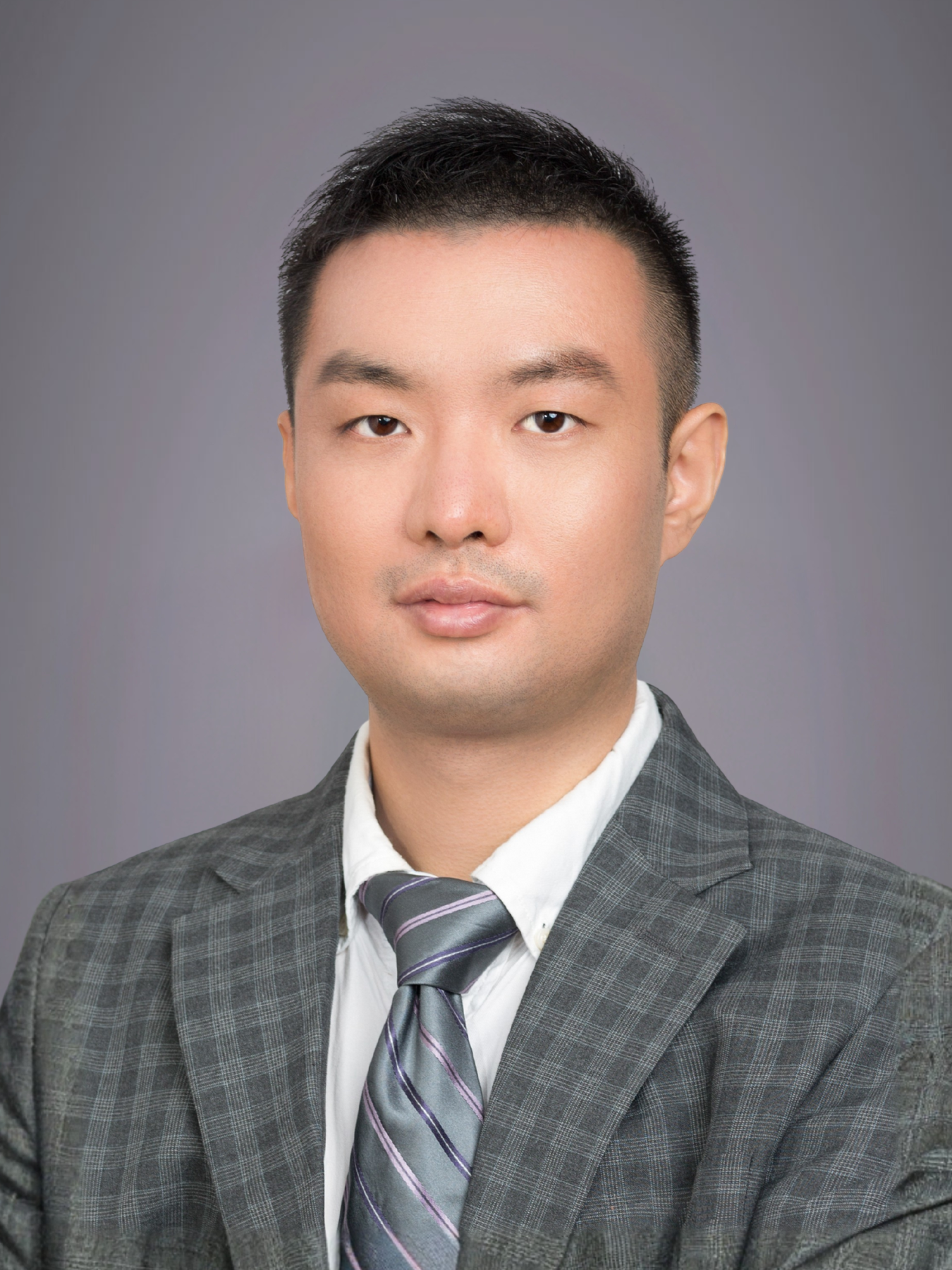
Cheng WANG
- 职称:
Principal Investigator
- 联系方式:
cheng.wang1@siat.ac.cn
- 个人网页:
- 座右铭:
个人简介
Hippocampus and its neighboring brain areas, together referred to as medial temporal lobe, play a key role in episodic memory processes. The “cognitive map theory” has been proposed as a framework to organize and understand the numerous anatomical, behavioral, and physiological findings. Our future research focuses on these two questions: how is the episodic memory system constructed, and how the stored experiences are used to guide future behavior?
研究领域
We are interested in the mechanism underlying episodic memory formation with an emphasis on spatial memory.
代表论著
1、Early and late place cells during postnatal development of the hippocampus. Chenyue Wang#, Hongjiang Yang#, Shijie Chen, Cheng Wang*, Xiaojing Chen*. Nat Commun, 2024.
2、Integration and competition between space and time in the hippocampus. Shijie Chen#, Ning Cheng#, Xiaojing Chen*, and Cheng Wang*. Neuron, 2024.
3、Multiplexing of temporal and spatial information in the lateral entorhinal cortex. Cheng Wang*, Heekyung Lee, Geeta Rao, James J. Knierim*. Nat Commun, 2024
4、Egocentric processing of items in spines, dendrites, and somas in the retrosplenial cortex. Ning Cheng#, Qiqi Dong#, Zhen Zhang#, Li Wang, Xiaojing Chen*, and Cheng Wang*. Neuron, 2024, 112(4):646-660e8.
5、Superficial-layer versus deep-layer lateral entorhinal cortex: Coding of allocentric space, egocentric space, speed, boundaries, and corners. Cheng Wang, Heekyung Lee, Geeta Rao, D. Yoganarasimha, Francesco Savelli, James J. Knierim. Hippocampus, 2023, 33(5)448-464.
6、Egocentric and allocentric representations of space in the rodent brain. Cheng Wang*, Xiaojing Chen, James J. Knierim*. Current Opinion in Neurobiology, 2020, Feb; 60:12-20.
7、Egocentric coding of external items in the lateral entorhinal cortex. Cheng Wang#, Xiaojing Chen#, Heekyung Lee, Sachin S. Deshmukh, D. Yoganarasimha, Francesco Savelli, James J. Knierim. Science, 2018, Nov; 362(6417):945-949.
8、Integrating time from experience in the lateral entorhinal cortex. Albert Tsao, Jorgen Sugar, Li Lu, Cheng Wang, James J. Knierim, May-Britt Moser, Edvard I. Moser. Nature, 2018, Sep; 561(7721):57-62.
科研\学术成果
1.Discovered the cellular and dendritic microcircuit mechanisms by which sensory information is transformed into spatial information;
2.Identified neuronal heterogeneities with distinct spatial encoding capabilities within the memory system, providing an important cellular basis for understanding spatial information coding;
3.Elucidated the principles of encoding and organization of spatiotemporal information.