
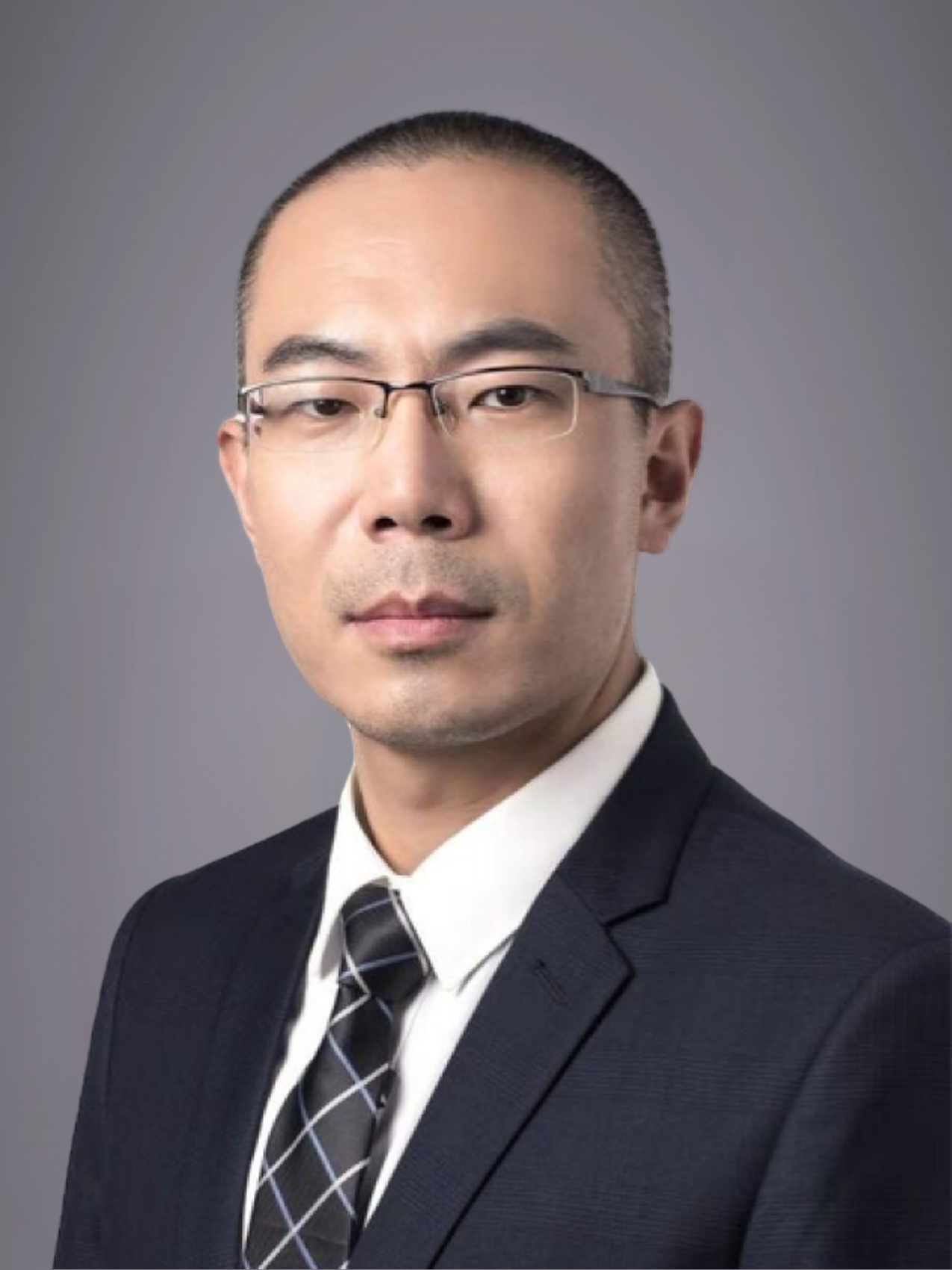
个人简介
Xiaojian Li, Professor of Senior Engineering, PhD Supervisor. He obtained his doctoral degree from the Institute of Biophysics, Chinese Academy of Sciences in 2010.From 2010 to 2018, he conducted research at the Medical College of Georgia and the Feinberg School of Medicine of Northwestern University, USA. His research focuses on cutting-edge neurotechnologies and their applications, including high-performance implantable brain-computer interfaces and neuromodulation using nanotechnology.He founded Weiling Medical Technology Co., Ltd. to translate and advance the clinical translation of implantable brain-computer interface technologies.
研究领域
High-Performance Brain-Computer Interfaces
代表论著
1. Xin Fu#, Zhengwei Hu#, Wenjun Li, Liang Ma, Junyu Chen, Muyang Liu, Jie Liu, Shuhan Hu, Huachun Wang, Yunxiang Huang, Guo Tang, Bozhen Zhang, Xue Cai, Yuqi Wang, Lizhu Li, Jian Ma, Song-Hai Shi, Lan Yin, Hao Zhang, Xiaojian Li*, Xing Sheng*. “A silicon diode–based optoelectronic interface for bidirectional neural modulation[J]” Proceedings of the National Academy of Sciences. 2024, 121(30): e2404164121.
2. Yunxiang Huang#, Yuting Cui#, Hanjie Deng, Jingjing Wang, Rongqi Hong, Shuhan Hu, Hanqing Hou, Yuanrui Dong, Huachun Wang, Junyu Chen, Lizhu Li, Yang Xie, Pengcheng Sun, Xin Fu, Lan Yin, Wei Xiong, Song-Hai Shi, Minmin Luo, Shirong Wang, Xiaojian Li*, Xing Sheng*. “Bioresorbable thin-film silicon diodes for the optoelectronic excitation and inhibition of neural activities[J]” Nature Biomedical Engineering, 2023, 7(4): 486-498.
3. Ming Yang#; Taotao Yang#; Hanjie Deng; Jingjing Wang; Shan Ning; Xing Li; Xiaoning Ren; Yuming Su; Jianfeng Zang; Xiaojian Li*; Zhiqiang Luo*. “Poly (5-nitroindole) Thin Film as Conductive and Adhesive Interfacial Layer for Robust Neural Interface[J]” Advanced Functional Materials, 2021, 31(49): 2105857.
4. Naoki Yamawaki#; Xiaojian Li; Laurie Lambot; Lynn Y. Ren; Jelena Radulovic; Gordon M. G. Shepherd*. “Long-range inhibitory intersection of a retrosplenial thalamocortical circuit by apical tuft-targeting CA1 neurons[J]” Nature neuroscience, 2019, 22(4): 618-626.
5. Yuanwen Jiang#; Xiaojian Li#; Bing Liu; Jaeseok Yi; Yin Fang; Fengyuan Shi; Xiang Gao; Edward Sudzilovsky; Ramya Parameswaran; Kelliann Koehler; Vishnu Nair; Jiping Yue; KuangHua Guo; YinFang; Hsiu-Ming Tsai; George Freyermuth; Raymond C. S. Wong; Chien-Min Kao; Chin-Tu Chen; Alan W.Nicholls; Xiaoyang Wu; Gordon M. G. Shepherd; Bozhi Tian*; “Rational design of silicon structures for optically controlled multiscale biointerfaces[J]” Nature biomedical engineering, 2018, 2(7): 508-521.
科研\学术成果
His landmark achievements in brain-computer interfaces include being among the first in China to establish the full-stack technology chain for implantable brain-computer interfaces, and continuously leading the development of non-genetic optical nanotechnology-based neuromodulation and remote control at the international level.
In the past five years, Dr. Li has published a number of high-impact papers in various Nature and Science sub-journals. He has been awarded the Shenzhen Pengcheng 孔雀 Program (Class B) Talent and the Outstanding Young Scientist Award at the 1st China Brain-Computer Interface Hua Nao Scholar Award.
His academic and industrial appointments include:Expert of the Working Group for the International Standardization Subcommittee on Brain-Computer Interfaces;Vice Chairman of the Professional Committee on Brain-Computer Interface and Brain-inspired Intelligence, China Standardization Association;Vice Chairman of the General Group and Chair of the Basic Hardware Group, China Brain-Computer Interface Industry Alliance;Founder and Chairman of Weiling Medical Technology Co., Ltd., a company dedicated to the technological integration of brain-computer intelligence.